 12 Hours ago
 Posted on Google
 23 Hours ago
Posted on Google
23 Hours ago
Posted on Google 23 Hours ago
Posted on Google
23 Hours ago
Posted on Google 2 Days ago
Posted on Google
2 Days ago
Posted on Google 2 Days ago
Posted on Google
2 Days ago
Posted on Google 2 Days ago
Posted on Google
2 Days ago
Posted on Google 2 Days ago
Posted on Google
2 Days ago
Posted on Google 3 Days ago
Posted on Google
3 Days ago
Posted on Google 3 Days ago
Posted on Google
3 Days ago
Posted on GoogleThe ultimate guide to the best power tools
Professional or DIY passion
 06.06.2023
Power tools are the backbone of any construction project. They are powerful, efficient and make the job easier for workers. These machines come in various shapes and sizes, from hand drills to large industrial saws. Power tools have revolutionized the way we build things, making construction work faster, safer and more accurate.
Whether you're a professional contractor or a DIY enthusiast, power tools can help you achieve your goals quickly and efficiently. With their impressive power capabilities, they can handle even the toughest jobs with ease. From drilling holes to cutting through metal pipes and polishing wood surfaces, power tools offer precision unmatched by traditional hand tools.
This article will examine some of the most commonly used power tools in construction projects today, including drills, saws, sanders, grinders, and gauges and accessories that enhance their functionality.
Power Drill
 Power drills are essential tools in many industries and homes, capable of drilling holes and driving screws with precision and efficiency.
There are several types of power drills on the market, each designed for specific tasks. For example, an impact drill is ideal for drilling through hard materials like concrete, while a rotary drill is best for woodworking.
When choosing a power drill, the question of corded or cordless models is also important. Corded drills tend to be more powerful than their cordless counterparts, but they lack the mobility benefits that cordless models offer. The size of the drill chuck also varies between different power drills, with some having larger chucks for larger drills while others have smaller chucks for more precise work.
RPM options and the distinction between impact and normal functions are also important factors when choosing a power drill. A higher RPM allows users to work faster, while an impact function helps increase torque for heavier tasks like driving screws into dense wood or metal surfaces.
Ultimately, choosing the right type of power drill depends on the user's needs and preferences, as well as the task that needs to be completed.
Saws
 One of the most common types of saws used in woodworking is the and guided circular saw, which can make precise cuts with a rapidly rotating blade. Circular saws are versatile and can be used to cut a variety of materials including wood, metal and plastic. They are also portable and easy to use, making them a popular choice for professional contractors and do-it-yourselfers.
Another type of saw commonly used in woodworking is the jigsaw or scroll saw. These tools are designed to make curved cuts in materials such as wood or metal. Jigsaws and scroll saws have a narrow blade that moves up and down quickly while cutting the material at high speed. This allows you to create intricate designs and shapes with ease.
Reciprocating saws are another type of power tool used in construction projects. These tools also have a long blade that moves back and forth quickly, similar to a hand saw. Recipro saws are ideal for demolition work or cutting thick materials like wood or metal pipes.
Table saws and miter saws are stationary tools found in workshops rather than construction sites. Table saws feature a flat table surface with an adjustable blade height, while miter saws provide angled cuts by tilting the blade at different angles. Both types of power tools offer precise cutting capabilities, but require more space due to their size.
| Type | Advantages | Disadvantages |
|---|---|---|
| Circular Saw | Versatile, portable, easy to use | Can cause kickback if not handled properly |
| Jigsaw/Laub Saw | Ideal for intricate designs/shapes | Limited depth of cut |
| Recipro saw | Good for demolition work/thick materials | Can produce rough cuts |
In summary, there are several types of power tools for woodworking, each with their own strengths and weaknesses. Whether it's a hand-held circular saw for precise cuts or a table saw for larger projects, these tools have revolutionized the way woodworkers approach their craft. With the right tools and proper safety precautions, anyone can create beautiful and functional pieces of woodwork.
/prod/5/5/5/imp_1_555962.jpg "Metabo ASA 30 H PC all-purpose vacuum cleaner")
/prod/5/5/1/bimg_551868_8bae878fa61d053a03cc8fca546f9130.jpeg "Metabo ASA 30 M PC Wet and dry all-purpose vacuum cleaner 1,200W 602087000")
 326.95
/prod/1/4/0/bimg_140023_32292102_4590609535.jpeg "Metabo ASR 35 L ACP (602057000) DE plug")
/prod/1/8/2/bimg_182249_219541764_xxl3.jpg "Metabo SPA 1200 chip extraction system 601205180 CH")
/prod/5/5/5/imp_1_555961.jpg "Metabo ASA 30 L PC all-purpose vacuum cleaner")
Sanding
 Sanders are essential for achieving a smooth and polished finish on wood projects. They use abrasives to remove rough surfaces and imperfections. There are several types of sanders on the market, each designed for specific tasks.
The most common types of sanders are belt sanders, disc sanders, random orbital sanders and detail sanders. To get the best results from your sander, it is important to understand different sanding techniques such as circular or straight strokes.
A crucial aspect of using a sander is safety. Always make sure you wear protective gear such as goggles and hearing protection to protect your eyes and ears from dust and noise. Also, make sure your work area is well ventilated to avoid inhaling dust particles.
The grit of the sandpaper you use can significantly affect the outcome of your DIY project. Generally, lower numbers indicate coarser grits, while higher numbers represent finer grits. When starting any project with a new surface or type of material, begin with a coarser grit before moving on to finer ones to achieve a smoother finish.
With these tips and a little practice, you can create beautiful DIY projects with ease using the right type of sander for the job.
Measuring Tools
Accurate measurement of materials and objects is crucial in various industries, which is why the use of measuring tools is essential. Precision measuring tools are used to ensure that measurements are taken accurately and consistently. Digital calipers are a popular tool for measuring small distances with high levels of accuracy. These calipers have an LCD screen that displays measurements digitally, making them easier to read than traditional calipers.
In addition to digital calipers, laser rangefinders have become increasingly popular due to their speed and accuracy. These devices use laser technology to calculate distances quickly and accurately. Tape measures remain a staple in many industries due to their versatility and ease of use. However, it should be noted that tape measures cannot always provide the same level of precision as digital or laser-based tools.
Protractors are another type of precision measuring tool commonly used in construction and woodworking industries. These devices allow users to measure angles with a high degree of accuracy, making them ideal for tasks like cutting wood at specific angles.
In summary, precision measuring tools are essential in a variety of industries where accuracy is critical. Digital calipers, laser rangefinders, tape measures and protractors are some of the most commonly used tools for precise measurements. Each tool has its advantages and disadvantages, which is why it's important to choose the right tool for the job. Ultimately, choosing the right measuring tool can have a significant impact on the quality and efficiency of work in many industries.
Tool accessories
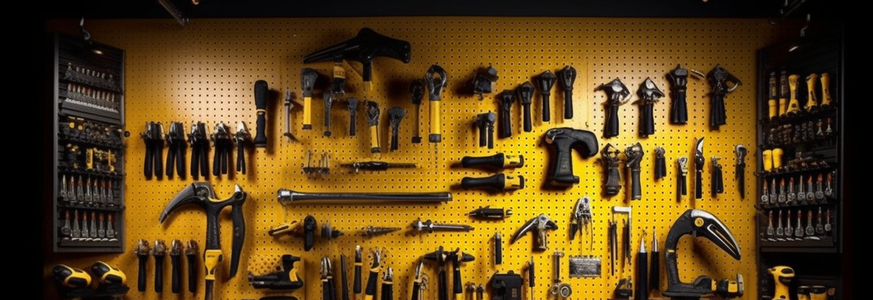 A key aspect of improving the performance and functionality of power tools is to utilize various attachments and accessories. Power tool accessories include tool storage, work safety, cutting blades, drill bits and workbench organization. These accessories can improve the efficiency, precision and safety of power tools.
Tool storage is an important power tool accessory because it helps keep equipment properly organized and secured. It saves time by providing quick access to the tools you need while ensuring they are protected from damage or loss.
Workplace safety such as gloves, safety glasses, hearing protection and respirators are essential to protect workers from harmful chemicals or waste that can result from the use of power tools.
Cutting blades and drill bits are critical elements in any construction or manufacturing project that requires power tools. The quality of these accessories determines the accuracy and efficiency of cuts made with saws or drills.
Workbench organization is another important accessory that ensures all necessary components are within reach while reducing the work area.
In summary, the use of appropriate accessories for power tools can improve the performance of the machines by improving their functionality and efficiency, while ensuring the safety of workers. Tool storage provides quick access to needed equipment and protects it from damage or loss. Worker safety protects workers from hazardous materials. Cutting blades and drills ensure precise cuts. Workbench organization reduces the work area. Therefore, selecting appropriate accessories for specific tasks can greatly improve productivity.
Frequently asked questions
What safety measures should I consider when using power tools?
Safety is a critical aspect when using tools, and proper precautions must be taken to minimize the risk of accidents. Safety tips include wearing protective clothing such as safety glasses, gloves and noise-canceling headphones to protect against flying debris, dust and loud noises.
Before using a tool, it is essential to thoroughly inspect it for signs of damage or wear that could affect its performance or cause injury. In addition, proper handling techniques should always be followed, such as keeping fingers away from moving parts and avoiding distractions when using power tools.
In the event of an emergency or accident, one should have an emergency plan on hand that includes shutting down the tool quickly and having access to first aid kits. By consistently following these safety measures, one can ensure that the risk of accidents while using power tools is reduced.
How can I properly maintain my tools to ensure their longevity?
Maintaining equipment or tools is an essential aspect of ensuring their longevity, regardless of type or species. Proper cleaning techniques, lubrication methods, storage tips, blade sharpening and replacement parts are critical components that affect the life of a tool. Neglecting these aspects can lead to frequent breakdowns and costly repairs.
For example, think of a car engine without an oil change or filter replacement - it will eventually seize up and cause significant damage to the entire vehicle. Similarly, power tools require regular care and maintenance to function properly and last longer.
Cleaning the tool after each use with a dry cloth or compressed air helps remove dust and dirt from moving parts. Lubrication methods such as oiling gears and greasing bearings reduce friction between metal components for smoother operation. Keeping the tool in a dry place away from moisture also minimizes rusting on metal surfaces.
Sharpening blades ensures effective cutting performance and reduces stress on the motor by using less force during operation. Finally, replacing worn parts such as cables or blades prevents accidents and ensures optimal functionality of the power tool for longer periods of time.
Can power tools be used for DIY projects or are they exclusively for professionals?
DIY applications of tools are widespread and can be used by people who are not necessarily professionals. Entry-level tools provide a suitable starting point for beginners to explore various DIY projects with ease.
Versatile options are also readily available that can be used for multiple functions and purposes. Budget-friendly alternatives offer a cost-effective solution without sacrificing quality or functionality.
Specialty power tools are tailored to specific tasks that may require advanced knowledge or expertise, but overall, there are a number of options for those looking to complete DIY projects independently.
What is the difference between corded and cordless power tools?
Corded and cordless power tools differ in terms of battery life, power, mobility, charging time and price range.
Cordless tools have improved significantly over the years, but still lag behind corded tools in terms of overall performance. Cordless tools, however, offer greater mobility and convenience because they do not require a power source to operate.
Battery life of cordless tools varies depending on use and type of tool, with some lasting hours while others may only last a few minutes.
Charging times can also vary widely between models and brands.
Corded tools are generally less expensive than cordless due to the cost of batteries and associated technology.
Ultimately, the choice between corded or cordless tools depends on individual needs and preferences such as portability versus power.
Are there environmentally friendly power tool options?
In recent years, there has been an increasing demand for environmentally friendly alternatives in many industries. In response to concerns about environmental impact and reducing carbon footprints, manufacturers have begun to use renewable energy sources and employ sustainable manufacturing processes.
This trend is also visible in the power tool industry, where companies are offering greener options such as battery-powered tools that use rechargeable batteries instead of disposable ones. In addition, some manufacturers have begun using recycled materials in their products to minimize waste and reduce their environmental impact.
These efforts toward sustainability show a growing awareness of the need for companies to set environmentally friendly priorities and encourage consumers to make more conscious choices when purchasing power tools or other products.
More articles that might interest you
/advert/ad-oDT-vergleich-gts-10-xc-dewalt-dwe7492.webp "Comparison of GTS 10 XC against Dewalt DWE7492")
/advert/ad-tUg-beste-bohrmaschinen.png "The best drills")
/advert/ad-UXN-schleifmaschine-bildinformation.jpg "Everything you need to know about grinding machines")
/advert/ad-z1Z-beste-saegen-fuer-projekte.png "The best saws for every project")
/advert/ad-fWp-die-besten-messwerkzeuge-laser-levels-im-vergleich-laser-level-vergleich.png "The best measuring tools laser levels in comparison")
/prod/5/5/5/bimg_555425_go_2710517.jpg "Metabo ASA 30 H PC Wet and Dry Vacuum Cleaner All-in-One 1,200W 602088000 (EU)")
/prod/5/5/7/bimg_55753_71BYorenRYL.jpg "Alpen Ceramic drill PROFI KERAMO 5 mm")
/prod/5/8/1/imp_1_581173.jpg "Alpen Timber twist drill Timber Twist PLT ø 2.5 mm")
/prod/1/8/3/bimg_183652_go_3710196.jpg "Metabo Bit-Box TX 20 SP 25 pieces (626712000)")
/prod/5/7/4/imp_1_574131.jpg "Metabo Pleated filter dust class H, certified for AUS")
/prod/1/8/2/bimg_182814_101566460_5739722916.jpeg "Metabo 10 sanding sheets 115x280 mmP 80H + MSR (624493000)")
/prod/1/8/3/bimg_183653_81ZzT8R90bL.jpg "Metabo Bit-Box TX 25 SP 25 pieces (626713000)")
/prod/1/8/3/bimg_183471_go_6411492.jpg "Metabo 5 fleece tapes 6x457 mm medium BFE (626384000)")
/prod/5/8/6/bimg_586569_71Hj2jKfPOL.jpg "Metabo Diamond cutting blade 150x22.23mm, CP, concrete professional")
/prod/2/1/2/imp_1_212900.jpg "Ryobi RB18L40 rechargeable battery Lithium + 18 V, 4.0 Ah spare battery")
/prod/3/4/9/imp_2_e61u_349164.jpg "Tormek Knife grinding machine T-2 Pro Kitchen")
/prod/1/8/3/bimg_183832_221734533_xxl3.jpg "Metabo Spare brush ring RS (628214000)")
/prod/2/3/0/imp_1_230681.jpg "Metabo Guide rail FS 250 (629013000)")
/prod/5/7/4/bimg_574124_31hpd9yPmAL.jpg "Metabo 2 Phillips bits size 2 / 146 mm")
/prod/1/8/2/bimg_182811_101542146_1040061325.jpeg "Metabo 10 sanding sheets 115x280 mmP 240H + MSR (624497000)")
/prod/1/8/2/bimg_182809_go_3707139.jpg "Metabo 10 sanding sheets 115x280 mmP 120H + MSR (624495000)")
/prod/1/8/3/bimg_183661_go_6010284.jpg "Metabo Floor nozzle D-35mm B-370mm f. Flüssigk. (630329000)")
/prod/1/8/2/bimg_182852_go_7504623.jpg "Metabo 10 sanding belts 40x760 mm P120 ZK RBS (626307000)")
/prod/5/5/2/imp_1_55274.jpg "Alpen Twist drill HSS - MAYKESTAG DIN338 RN 8.5 mm")