 22 Hours ago
 Posted on Google
 2 Days ago
Posted on Google
2 Days ago
Posted on Google 2 Days ago
Posted on Google
2 Days ago
Posted on Google 2 Days ago
Posted on Google
2 Days ago
Posted on Google 3 Days ago
Posted on Google
3 Days ago
Posted on Google 3 Days ago
Posted on Google
3 Days ago
Posted on Google 3 Days ago
Posted on Google
3 Days ago
Posted on Google 3 Days ago
Posted on Google
3 Days ago
Posted on Google 4 Days ago
Posted on Google
4 Days ago
Posted on GoogleThe best measuring tools laser levels in comparison
Find the perfect laser level for your measurement tasks
 07.06.2023
The world of construction and design has come a long way since the days of measuring with simple rulers and tape measures. With the advent of technology, there are now a variety of tools that can help measure distances, angles and even heights with accuracy and precision. One such tool is the laser level.
Laser levels have become an indispensable tool for those in the construction industry as well as DIY enthusiasts. These instruments emit a beam of light that can be projected onto surfaces to create a flat line or point that can be used as a reference point for measurements. Laser levels are not only easy to use, but also very accurate, making them an ideal tool for anyone who wants to achieve precise measurements in their work.
In this article, we'll explore the basics of laser levels, including different types and features, how to choose the right one for your needs, how to use it effectively, and tips for maintaining its accuracy over time.
Basic Understanding of Laser Levels.
 To gain a basic understanding of laser levels, it is essential to understand the basic principles of how they work and their various applications in construction and engineering.
Laser levels are used to accurately measure and align objects or surfaces horizontally or vertically. They emit a highly focused beam of light that provides a reference point for measurements and allows for precise adjustments.
A significant benefit of using a laser level is its ability to save time and increase efficiency on job sites. Traditionally, builders have had to use physical leveling devices such as spirit levels, ghost levels or sinkers, which are time-consuming and require multiple people.
With laser levelers, one person can complete tasks that previously required multiple workers, and in less time. This allows projects to move faster while maintaining accuracy.
Applications of laser levelers are broad and include leveling floors during construction, installing ceilings, laying tile or carpet; even landscape work such as grading land can be achieved with greater precision using this tool.
In addition, laser levelers are increasingly popular among DIY enthusiasts due to their ease of use and affordable price compared to traditional leveling tools.
Overall, understanding the basics of how laser levels work can help users realize their full potential in construction and engineering.
/prod/7/0/4/imp_1_704530.jpg "Einhell Cross Line Laser TC-LL 2 G 16 m")
/prod/4/6/3/bimg_463568_2109833_hauptbild.jpg "Stabila Multiline laser LAX 600G")
/prod/3/4/9/bimg_349637_2108660_hauptbild.jpg "Stabila LAX 50 cross line laser, 2-part set")
/prod/3/4/9/imp_1_349508.jpg "Stabila LAR 160 G rotating laser, 4-part set")
/prod/3/4/9/bimg_349642_go_9019084.jpg "Stabila LAX 400 multiline laser, 5-piece set")
/prod/5/2/5/imp_1_525690.jpg "Laserliner Cross line laser Duraplane 360 Set 175 cm 3 m")
Types of laser levels and their characteristics
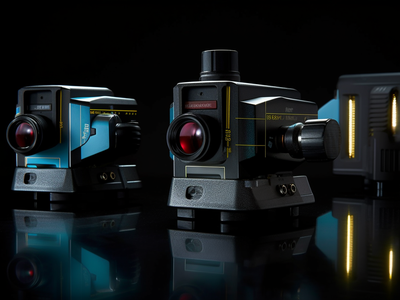 Different categories of laser levels have unique features and functions that make them suitable for specific tasks. Advances in laser level technology have led to the development of different types of laser levels, each of which has its own features and benefits.
Here are some common types of laser levels and their applications:
-
Rotating laser levels: these types of laser levels emit a 360-degree laser line around a room or outdoor area, making them ideal for large projects such as leveling land or installing ceiling tiles.
-
Line Laser Levels: These lasers project a straight line onto surfaces such as walls or floors, making them perfect for interior projects such as installing cabinets or tile work.
-
Point Laser Levels: These lasers produce multiple points in different directions and angles that can be used to create right angles and measure distances between points. They are therefore useful for do-it-yourselfers who need precise measurements.
-
Combination laser levels: as the name suggests, these lasers combine multiple functions into one device. Combination lasers can project both lines and points from one unit.
Laser level accessories can further enhance the functionality of these units. Accessories such as tripods and wall mounts allow users to stabilize their laser level for more accurate measurements, while remote controls allow individuals to operate their device remotely.
Overall, understanding the different types of laser levels on the market allows both professionals and DIYers to choose the best tool for their specific needs. As technology advances, we can expect even more innovative features from laser levels in the future.
Choosing the right laser level for your needs
 Selecting the appropriate laser level for your specific project requires careful consideration of several factors. One of the most important factors is the size and complexity of the job. For larger and more complex projects, it may be necessary to invest in a higher-end laser level with advanced features such as self-leveling capabilities or multiple beams. However, for smaller projects, a basic laser level may be sufficient.
Another factor to consider when choosing a laser level is accuracy. If precision is essential to the success of your project, you should invest in a high-quality laser level that can reliably deliver accurate measurements. While there are many affordable options on the market, some brands may offer better accuracy than others depending on their design and technology.
Finally, budget constraints should also be considered when choosing a laser level. Prices can range from under $50 for basic models to several thousand dollars for top-of-the-line models with advanced features. It is important to compare prices and features of different brands before making your final decision.
The table below provides an overview of some popular brands and their price ranges:
| Brand | Price Range |
|---|---|
| Bosch | 100 - 500 USD |
| Dewalt | 150 - 1,000 USD |
| Leica | 500 - 3,000 USD |
| Topcon | 300 - 2.000 USD |
| Spectra Precision | 200 - 1,500 USD |
By considering these factors and comparing different brands within your price range, you can find the right laser level to fit your needs and budget. With so many options on the market today, it's easier than ever to find innovative tools that will help you complete your projects accurately and efficiently.
How to use a laser level for precise measurements
 By using a beam of light to create a straight line, you can achieve accurate and precise alignments for a variety of applications. A laser level is a tool that projects a beam of light onto surfaces to help with leveling or alignment tasks.
However, it is critical to use the laser level properly to ensure accurate measurements.
A crucial aspect of using a laser level is calibration. Before you begin any project, you need to calibrate your device to ensure accuracy and precision. Calibration involves verifying that the instrument's bubble level and laser are properly aligned. Inaccurate calibration will result in incorrect readings, which will lead to erroneous results.
Another common mistake when using laser levels is not paying attention to the surface being measured. Uneven surfaces can cause inconsistencies in the measurements, leading to inaccurate readings. To avoid this problem, always check that the surface you are working on is smooth and even before starting your project.
In summary, using a laser level for accurate measurements requires proper calibration and attention to detail when measuring surfaces. By taking these precautions, users can use their laser levels effectively without encountering inaccuracies or errors when completing their projects.
Tips for maintaining the accuracy of your laser level.
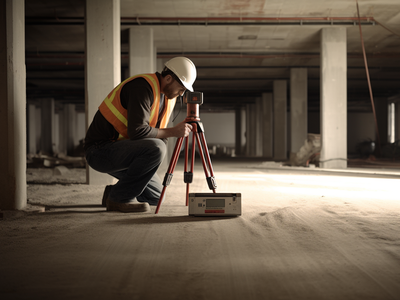 Maintaining the accuracy of a laser level requires ongoing maintenance and attention to detail. Even the most advanced laser level can lose accuracy over time, especially if it is not properly maintained.
One of the most important steps to maintaining the accuracy of your laser level is to calibrate it regularly. Calibration involves adjusting the instrument to ensure that its measurements are accurate. It is essential to follow the manufacturer's instructions for calibration, as each instrument may have different requirements.
In addition to regular calibration, keeping the laser level clean is also critical to maintaining its accuracy. Dirt, dust or debris on the lens or other parts of the machine can cause inaccurate readings. To avoid this problem, be sure to clean your equipment after each use and store it in a safe place where it will not be exposed to dust or moisture. Use a soft cloth or brush to remove dirt from the lens and other sensitive parts of your laser level.
In summary, proper maintenance is key to ensuring that your laser level remains accurate over time. By following a regular calibration process and keeping your equipment clean, you will extend its life and get more accurate readings from your instrument. Keep in mind that even minor variations can lead to significant errors in measurements. Therefore, taking care of your equipment pays off in terms of precision and efficiency in all types of projects where measurements are important.
More articles that might interest you
/advert/ad-UXN-schleifmaschine-bildinformation.jpg "Everything you need to know about grinding machines")
/advert/ad-oDT-vergleich-gts-10-xc-dewalt-dwe7492.webp "Comparison of GTS 10 XC against Dewalt DWE7492")
/advert/ad-tUg-beste-bohrmaschinen.png "The best drills")
/advert/ad-z1Z-beste-saegen-fuer-projekte.png "The best saws for every project")
/prod/3/4/9/imp_1_GP6J_349506.jpg "Stabila Laser rangefinder LD 520")
/prod/3/4/9/bimg_349504_71rgSCM2aVL.jpg "Stabila Laser rangefinder LD 250 BT")
/prod/5/2/5/imp_1_525674.jpg "Bosch Professional Laser distance meter GLM 100-25 C 100 m")
/prod/3/4/9/bimg_349511_817o-eyhuVL.jpg "Stabila LAR 300 rotating laser, 3-part set")
/prod/3/4/9/bimg_349643_2108728_hauptbild.jpg "Stabila LAX 400 multiline laser, 6-part telescope")
/prod/5/3/8/imp_1_538005.jpg "Bosch Laser distance meter Zamo Set 25 m")
 119.00
/prod/3/4/9/imp_1_349638.jpg "Stabila LAX 50 G cross line laser, 3-part set")
/prod/4/5/8/bimg_458901_2109817_hauptbild.jpg "Stabila Multiline laser LAX 600")
/prod/5/2/5/imp_1_525722.jpg "Leica Disto X3 150 m laser distance meter")
/prod/5/2/5/imp_1_525675.jpg "Bosch Professional Bosch GLM 50-25 G Laser Distance Measurer")
/prod/5/2/5/imp_1_525717.jpg "Leica Laser distance meter Disto D1 40 m")
/prod/5/4/4/imp_1_544942.jpg "Bosch Laser distance meter Zamo 20 m")
/prod/5/2/5/imp_1_525695.jpg "Laserliner Cross line laser PocketPlane-Laser 3G 30 m")
/prod/5/2/5/imp_1_525718.jpg "Leica Laser distance meter Disto D110 60 m")
/prod/5/2/8/imp_1_528574.jpg "Bosch Professional Rotation laser GRL 600 CHV, kit, 600 m")
/prod/5/2/8/imp_1_528167.jpg "Bosch Professional Rotary laser with RC 1, WM 4 and LR 1,GRL 300 HV, 300 m")
/prod/5/2/5/imp_4_525651.jpg "Bosch Cross line laser Quigo Plus 7 m")
/prod/5/2/5/imp_1_525676.jpg "Bosch Professional Line laser GCL 2-15 + RM1 15 m 15 m")