 2 Days ago
 Posted on Google
 3 Days ago
Posted on Google
3 Days ago
Posted on Google 3 Days ago
Posted on Google
3 Days ago
Posted on Google 3 Days ago
Posted on Google
3 Days ago
Posted on Google 3 Days ago
Posted on Google
3 Days ago
Posted on Google 3 Days ago
Posted on Google
3 Days ago
Posted on Google 4 Days ago
Posted on Google
4 Days ago
Posted on Google 4 Days ago
Posted on Google
4 Days ago
Posted on Google 4 Days ago
Posted on Google
4 Days ago
Posted on GoogleThe best saws for every project
Learn which saw is best suited for your needs.
 07.06.2023
Saws have been used for centuries as one of the most basic and indispensable tools in woodworking. With the advent of modern technology, saws have evolved to become more efficient and precise, allowing woodworkers to produce sophisticated designs with ease.
Today, there are several types of saws on the market, each designed for a specific purpose.
Hand saws are perhaps the most traditional type of saw still in use today. These saws come in various shapes and sizes, but are generally used to make precise cuts on small pieces of wood or to trim edges.
Circular saws, on the other hand, are more versatile and can effortlessly cut through large sheets of wood. They are often used for construction work or for cutting wood into smaller pieces.
Jigsaws offer even more versatility, as they can be used to make curved or intricate cuts in a variety of materials, such as metal or plastic.
Saber saws are ideal for demolition work, as they can easily cut through sturdy materials like nails or metal pipes.
Finally, table saws provide a stable platform that allows users to make accurate and straight cuts over longer distances by inserting the material into the blade and keeping their hands away from hazards.
In this article, we will examine these five types of saws in detail and look at their design features and applications in various industries. We will also discuss some important safety measures to take when working with each type of power tool to ensure maximum efficiency while minimizing risks.
Ultimately, readers will gain an understanding of how innovation has reshaped our understanding and use of one of mankind's oldest tools - the humble but indispensable saw!
Hand saws for precise cuts
Hand saws are a useful tool for making precise cuts in woodworking and other related industries. Choosing the right tooth configuration is critical to ensuring the saw can cut through material efficiently. The number of teeth per inch (TPI) determines how fine or coarse the cut will be. A higher TPI means a finer cut, while a lower TPI results in a coarser cut.
Using a miter saw for perfect angles is another essential technique when using hand saws. A miter saw is a tool that guides the saw at specific angles and ensures that each cut is accurate and consistent. It also prevents the wood from slipping while cutting, resulting in cleaner and more precise cuts.
In addition to choosing the right tooth configuration and using a miter saw, it's important to properly maintain your hand saw. Keeping it clean and sharpened will ensure that it performs optimally every time you use it. Regularly sharpening the teeth of your handsaw with a file or grindstone will help maintain its effectiveness over time without having to replace it frequently.
By following these tips, you can achieve precise cuts with hand saws with ease in your woodworking projects or any other industry where precise cutting is required.
,no_upscale(),format(png)/prod/1/8/2/bimg_182033_go_9698833.jpg "Metabo BAS 318 Precision WNB (619009180) Band saw")
,no_upscale(),format(png)/prod/1/8/2/bimg_182032_go_9798813.jpg "Metabo BAS 261 Precision (619008180) Band saw")
,no_upscale(),format(png)/prod/1/3/9/imp_1_139309.jpg "Metabo KSU 251 machine stand")
,no_upscale(),format(png)/prod/2/3/0/bimg_230679_57991079_xxl3.jpg "Metabo Guide rail FS 160 (629011000)")
,no_upscale(),format(png)/prod/2/3/0/imp_1_230681.jpg "Metabo Guide rail FS 250 (629013000)")
,no_upscale(),format(png)/prod/1/3/9/imp_1_139310.jpg "Metabo KSU 401 machine stand")
 301.50
Circular saws for versatile cutting
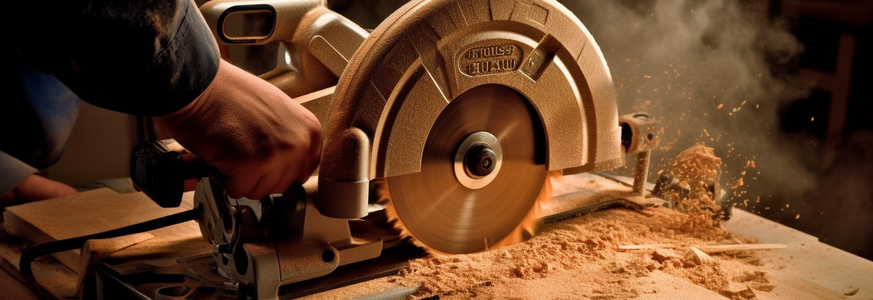 One of the most versatile cutting tools is the circular saw, which can effortlessly make precise cuts through a variety of materials. Its round blade spins at high speed and allows for straight or angled cuts in wood, plastic, metal and even masonry. This makes it an ideal tool for carpenters, contractors and do-it-yourselfers who need precise cutting for their projects.
However, safety measures must always be taken when using a circular saw. The speed and force of the blade can easily cause serious injury if not handled properly. Protective clothing such as goggles and gloves should be worn at all times to prevent debris from flying into the eyes or hands. In addition, the blade must be adjusted to the proper depth and angle before each cut to avoid recoil or binding.
Despite its potential hazards, a well-maintained circular saw can offer countless benefits to those seeking versatility in their cutting needs. With its ability to make precise cuts in a variety of materials, coupled with the safety measures taken during use, this powerful and versatile tool is sure to impress anyone looking to innovate their woodworking game.
Table saws for large and straight cuts
Table saws are commonly used in woodworking to make large and straight cuts on various materials, such as plywood or solid wood panels, and to achieve precise and consistent results. This type of saw consists of a circular blade mounted on a shaft and driven by an electric motor. The blade protrudes through the surface of a table that acts as a support for the material being cut.
An important factor in choosing a table saw is the rip fence. A rip fence is a guide that runs parallel to the blade, ensuring that cuts are made at a constant width from the edge of the material. Some table saws have built-in rip fences, while others have adjustable ones that can be positioned according to the user's needs.
Another important factor when choosing a table saw is the type of blade used. Different blades are designed for cutting specific materials such as hardwood or softwood. In addition, blades can vary in size and number of teeth, which affects their speed and precision. It is important to choose a blade that meets the requirements of the project.
In summary, choosing the right table saw for your needs requires consideration of features such as rip fences and blade types. By choosing a model with appropriate capabilities, woodworkers can achieve precise and efficient results in their projects.
Table saws remain an essential tool in any workshop because of their ability to handle larger pieces of material than other types of saws while producing accurate cuts over a longer period of time.
More articles that might interest you
,format(png)/advert/ad-pk1-gehrungssaege-praezises-schneiden.png "The best miter saws for precise cutting")
,format(png)/advert/ad-UXN-schleifmaschine-bildinformation.jpg "Everything you need to know about grinding machines")
,format(png)/advert/ad-oDT-vergleich-gts-10-xc-dewalt-dwe7492.webp "Comparison of GTS 10 XC against Dewalt DWE7492")
,format(png)/advert/ad-fWp-die-besten-messwerkzeuge-laser-levels-im-vergleich-laser-level-vergleich.png "The best measuring tools laser levels in comparison")
,format(png)/advert/ad-3ay-tischkreissaege.png "Everything you need to know about circular table saws")
,format(png)/advert/ad-tUg-beste-bohrmaschinen.png "The best drills")
,no_upscale(),format(png)/prod/5/5/5/imp_1_555977.jpg "Metabo Set KS 66 FS Hand-held circular saw")
,no_upscale(),format(png)/prod/8/6/2/imp_1_862795.jpg "Einhell Cordless Circular Saw TE-CS 18/165-2 Li – Solo")
,no_upscale(),format(png)/prod/8/5/1/bimg_851112_61NCwnhFigL.jpg "Bosch GCM 18V-305 GDC Professional 18V Cordless Miter and Compound Saw 0601B43000")
,no_upscale(),format(png)/prod/5/5/5/bimg_555986_337940286_xxl3.jpg "Metabo KGS 216 M cross-cut saw")
,no_upscale(),format(png)/prod/5/5/5/bimg_555988_337940283_xxl3.jpg "Metabo KGS 305 M cross-cut saw")
,no_upscale(),format(png)/prod/1/8/2/bimg_182163_216071700_xxl3.jpg "Metabo KGS 315 Plus (0103150018) Chop saw")
,no_upscale(),format(png)/prod/4/2/2/bimg_422319_232492881_xxl3.jpg "DeWalt DCS7485N-XJ portable cordless table saw Solo 54V FLEXVOLT")
,no_upscale(),format(png)/prod/1/8/2/bimg_182166_go_4700242.jpg "Metabo KGSV 72 Xact SYM (612216180) Chop saw")
,no_upscale(),format(png)/prod/4/8/9/bimg_489262_101807434_9425454530.jpeg "Metabo MS 36-18 LTX BL 40 2x 18V Battery Chainsaw Solo 601613850")
,no_upscale(),format(png)/prod/1/7/2/imp_1_172651.jpg "Metabo BAS 318 Precision DNB band saw 619010000")
,no_upscale(),format(png)/prod/2/7/9/imp_1_279708.jpg "DeWalt DCS570N 18V cordless circular saw without battery and charger box")
,no_upscale(),format(png)/prod/1/3/9/bimg_139259_1616669188.jpg "Bosch GTS-10 XC Professional Table Saw 0.601.B30.400")
,no_upscale(),format(png)/prod/2/7/9/bimg_279709_DCS570N-XJ-15e738138bff96_1280x1280.jpg "DeWalt DCS570NT-XJ 18V cordless circular saw Solo T-STAK Box")
,no_upscale(),format(png)/prod/4/9/8/bimg_498875_KGS254vYx09bALyFDE0_1280x1280.jpg "Metabo KGS 254 M Chop and mitre saw with pull function model 2023 602540000")
,no_upscale(),format(png)/prod/1/3/9/imp_1_139256.jpg "Bosch GSA 18V-LI Reciprocating Saw")
,no_upscale(),format(png)/prod/4/9/4/bimg_494391_4007430304865_1280x1280.jpg "Metabo BAS 261 Precision band saw 619008000")
,no_upscale(),format(png)/prod/1/7/1/bimg_171305_4007430230409-15e73746035963_1280x1280.jpg "Metabo KS 55 FS circular saw 600955500")
,no_upscale(),format(png)/prod/4/8/7/imp_1_487516.jpg "Bosch Professional Bosch GTS 635-216 Professional Table Saw")