 19 Hours ago
 Posted on Google
 1 Day ago
Posted on Google
1 Day ago
Posted on Google 2 Days ago
Posted on Google
2 Days ago
Posted on Google 2 Days ago
Posted on Google
2 Days ago
Posted on Google 2 Days ago
Posted on Google
2 Days ago
Posted on Google 2 Days ago
Posted on Google
2 Days ago
Posted on Google 3 Days ago
Posted on Google
3 Days ago
Posted on Google 3 Days ago
Posted on Google
3 Days ago
Posted on Google 3 Days ago
Posted on Google
3 Days ago
Posted on GoogleModern MTB helmets for ultimate protection
Discover the latest technologies and trends for a safe and stylish riding experience
 03.07.2023
In mountain biking, where freedom and adventure are top priorities, nothing is more important than a helmet that gives confidence and ensures safety. Modern MTB helmets have evolved to meet the demands of this exciting sport, integrating innovative features that provide a sense of security without compromising comfort or style.
These helmets are not just protective gear; they are engineering masterpieces designed to enhance the riding experience. With lightweight construction, adjustable fit systems, advanced ventilation and advanced MIPS technology, modern MTB helmets offer unparalleled protection against impact. They are designed to withstand the rigors of off-road terrain while providing optimal air circulation and temperature regulation. In addition to these basic features, manufacturers have incorporated several other safety enhancements into their designs.
By understanding the features of modern MTB helmets, riders can pedal with unwavering confidence knowing that they have equipped themselves with state-of-the-art head protection. This article will go into detail about these features and how each contributes to the rider's safety and overall riding experience.
So join us on a journey into the world of modern MTB helmets - a world where freedom meets innovation to create an unparalleled riding experience.
Lightweight construction
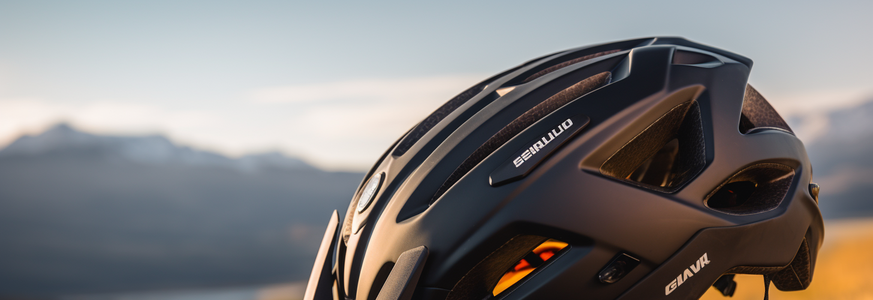 Lightweight construction is a prominent feature of modern mountain bike helmets, allowing for increased comfort and maneuverability on challenging trails. These helmets are designed to provide optimal protection while minimizing the weight load on the rider's head.
A key aspect of lightweight construction is impact resistance. Manufacturers use advanced materials such as carbon fiber and high-density foams to absorb and distribute the force of impacts, reducing the risk of head injury in crashes or collisions. Additionally, these materials are selected for their ability to maintain structural integrity under extreme conditions.
Another important element of lightweight construction is aerodynamic design. Mountain biking often involves high speeds and varying terrain, so it is critical that riders have a streamlined helmet that minimizes drag and turbulence. By reducing drag, an aerodynamically designed helmet allows riders to have a more efficient and controlled ride.
The combination of impact resistance and aerodynamic design in modern, lightweight mountain bike helmets offers numerous benefits for riders seeking freedom on the trails. Not only do these helmets provide essential protection from potential head injuries, but they also improve overall riding performance by allowing for increased comfort and maneuverability. With this advanced technology, mountain bikers can know with confidence that their helmet will support them every step of the way.
,no_upscale(),format(png)/prod/5/5/0/imp_1_550655.jpg "Sweet Protection Strayer 2Vi Mips Helmet Bronco White SM")
,no_upscale(),format(png)/prod/8/4/8/imp_1_848418.jpg "Sweet Protection Falconer Aero 2Vi Mips Helmet burnt brown ML")
,no_upscale(),format(png)/prod/5/5/9/bimg_559580_2443828-2024-08-27_10-59-41-1080p.jpg "Leatt Helmet MTB AllMtn 3.0 graphite S")
,no_upscale(),format(png)/prod/8/4/8/imp_1_848374.jpg "Sweet Protection Tucker III 2Vi Mips Helmet Bronco White SM")
,no_upscale(),format(png)/prod/7/8/1/imp_1_781021.jpg "ixs Carve 1.0 MIPS Helmet off white M")
,no_upscale(),format(png)/prod/5/2/4/imp_1_524231.jpg "Sweet Protection Redeemer 2Vi Mips Helmet matte black LXL")
Adjustable fit systems
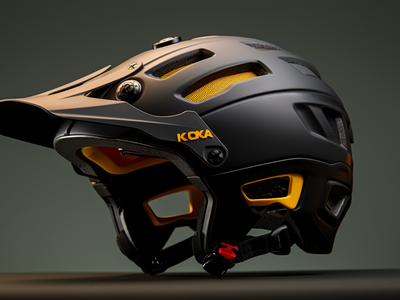 This discussion will focus on adjustable fit systems in modern mountain bike helmets. Specifically, dial or ratchet systems and adjustable fit options. These features are designed to provide users with a custom and secure fit for optimal comfort and safety while riding.
Dial or ratchet systems allow for easy adjustment of the helmet's circumference. Custom fit options provide additional adjustment options such as height and tilt to accommodate different head shapes and sizes.
Swivel or ratchet systems
Using a precision-engineered dial or ratchet system, modern mountain bike helmets provide cyclists with a secure and customizable fit, much like adjusting the tension on a finely tuned instrument.
These retention systems allow cyclists to fine-tune the fit of their helmet to ensure it stays securely in place on the most demanding rides. The knob or ratchet mechanism allows for easy adjustment by simply turning a knob or snapping it into place, eliminating the need for constant readjustments while riding.
This feature not only improves comfort, but also increases safety by preventing the helmet from slipping or falling off while riding. Additionally, strap adjustments can be made to further optimize fit and stability.
Cyclists who desire freedom and confidence will appreciate these advanced features that allow for personalized adjustments to ensure their helmet fits like a second skin.
Customizable fit options
One notable feature of modern mountain bike helmets is their ability to offer cyclists a highly customizable fit through the use of precision-engineered dial-in or ratchet systems. These systems allow riders to adjust the fit of the helmet to their specific head shape and size for maximum comfort and safety. In addition to these adjustable systems, modern MTB helmets also offer other customizable options such as customized padding and adjustable strap length.
Customized padding allows cyclists to further fine-tune the fit of their helmet by adding or removing padding in specific areas for a more personalized feel. This feature can be especially beneficial for those with unique head shapes or those who prefer a tighter or looser fit.
Adjustable strap length is another important element of a customizable fit. Cyclists can easily adjust the straps to achieve optimal tension and ensure the helmet stays securely in place throughout the ride.
Overall, these customizable fit options enhance freedom on the trails by giving mountain bikers a range of adjustment options to suit their individual preferences and needs.
| Customizable padding | Adjustable strap length |
|---|---|
| Allows for precise fit adjustment | Ensures secure and comfortable positioning |
| Can accommodate different head shapes | Provides flexibility for different wearing styles |
| Improves overall comfort | Prevents slippage during intense rides |
Advanced Ventilation
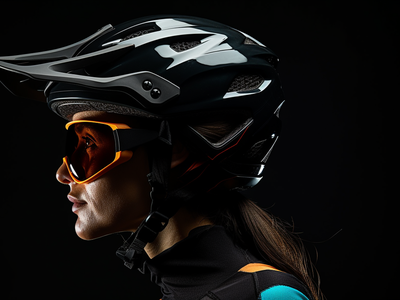 Despite the undoubtedly important role of advanced ventilation in modern MTB helmets, it is interesting to note that this seemingly crucial feature often goes unnoticed by riders, who focus mainly on the aesthetic appeal and overall comfort of the helmet.
Improved air circulation is a key element of advanced ventilation in MTB helmets, ensuring riders stay cool and comfortable during intense rides. The strategic placement of vents allows for efficient air circulation, preventing overheating and reducing the risk of heat-related injuries. In addition, sweat-wicking technology is often incorporated into these helmets to further improve their cooling performance. This technology helps to wick moisture away from the rider's head, keeping them dry and comfortable even during long rides in hot weather.
Incorporating advanced ventilation features into MTB helmets allows riders a greater sense of freedom on their rides. By maintaining a cool temperature inside the helmet, riders can focus more on their performance without being distracted by discomfort or excessive sweating. In addition, these ventilation features contribute to overall safety by preventing fogging of goggles or lenses and ensuring clear vision when riding through challenging terrain.
In summary, advanced ventilation plays an important role in modern MTB helmets by allowing improved air circulation and integrating sweat-wicking technology. These features promote rider comfort and safety by keeping them cool, dry and with clear vision during their rides.
MIPS Technology
 MIPS technology has revolutionized the field of helmet safety by introducing an innovative solution to reduce rotational forces during impacts. This technology stands for Multi-directional Impact Protection System and is designed to provide enhanced protection against brain injuries caused by rotational forces. The main feature of MIPS helmets is a low friction layer between the outer shell and the inner foam lining, which allows the helmet to rotate slightly during an impact. This rotational motion allows MIPS helmets to redirect and absorb a significant amount of energy that would otherwise be transferred directly to the head.
The effectiveness of MIPS technology in reducing rotational forces has been extensively studied and validated through scientific research. Numerous tests have shown that helmets with MIPS provide superior impact protection compared to conventional helmets. In fact, studies have shown that MIPS can reduce the risk of certain types of traumatic brain injury by up to 50%.
To better understand the working principle of MIPS, let's take a look at the table below:
| Helmet type | Impact protection | Reduction of rotational forces |
|---|---|---|
| Conventional helmet | Good | None |
| MIPS helmet | Excellent | Significant |
As shown in the table, MIPS helmets provide excellent impact protection and a significant reduction in rotational forces compared to traditional helmets.
Incorporating MIPS technology into modern mountain bike (MTB) helmets significantly improves their ability to protect against brain injuries caused by rotational forces during impacts. Cyclists who prioritize safety should invest in a helmet with this revolutionary technology.
Additional safety features
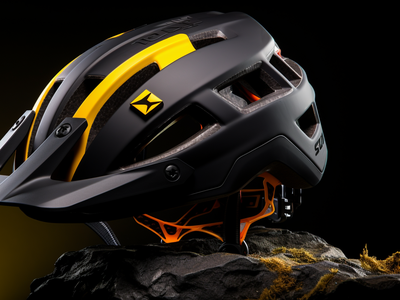 Another important aspect of helmet safety is the integration of additional features that further enhance protection during impact events.
Modern MTB helmets now use smart technologies and advanced impact protection systems to better protect riders' heads.
One notable feature found in some helmets is the integration of sensors and communication systems. These smart technologies can detect impacts and send notifications to emergency contacts or nearby medical facilities for rapid response in the event of an accident. This real-time monitoring capability ensures that help can be provided quickly and potentially reduces the severity of injuries.
In addition to smart technology, many modern MTB helmets are also equipped with advanced impact protection systems. These systems are designed to absorb and distribute forces from impacts over a larger area of the helmet to reduce the risk of head injury. Examples include multi-layer designs with varying densities of foam padding, as well as reinforced structures that provide increased durability.
By incorporating these additional safety features, modern MTB helmets provide riders with an extra layer of safety when hitting the trails. The combination of smart technology and advanced impact protection systems not only improves overall safety, but also promotes a sense of freedom as riders can push their limits while knowing they have reliable head protection.
More articles that might interest you
,format(png)/advert/ad-dDr-kinder-fahrradhelme-arten.png "Different types of children bicycle helmets")
,format(png)/advert/ad-bjM-mtb-helme-geheimnisse.png "Reveal the secrets of MTB helmets.")
,format(png)/advert/ad-XNh-fahrrad-full-face-helme.png "Bicycle Full Face Helmets")
,format(png)/advert/ad-IVd-fullface-helme-erkundung-welt.png "Ultimate Guide - Exploring the World of FullFace Helmets")
,format(png)/advert/ad-K8E-vollgesichts-helme.png "FullFace helmets")
,format(png)/advert/ad-BWX-integralhelme-vs-mtb-helme.png "Full face helmets vs MTB helmets")
,format(png)/advert/ad-P09-fahrradhelmzubehoer-sicherheit.png "The most important bicycle helmet accessories for your safety")
,format(png)/advert/ad-ehW-perfekter-kinderhelm.png "Choosing the perfect helmet for children")
,format(png)/advert/ad-x7Q-mountainbike-helm-offroad-abenteuer.png "A guide to mountain bike helmets for off road adventures")
,format(png)/advert/ad-p2H-rennsport-stil.png "Racing with style")
,no_upscale(),format(png)/prod/5/1/9/imp_1_519237.jpg "Sweet Protection Promuter Mips Helmet matte black LXL")
,no_upscale(),format(png)/prod/4/1/6/imp_1_YUb2_416615.jpg "Leatt MTB 1.0 helmet AM Jr lime XS")
,no_upscale(),format(png)/prod/5/3/8/imp_1_538268.jpg "Sweet Protection Falconer Aero 2Vi Mips Helmet Bronco White SM")
,no_upscale(),format(png)/prod/5/3/8/imp_1_538265.jpg "Sweet Protection Falconer 2Vi Mips Helmet Bronco White SM")
,no_upscale(),format(png)/prod/4/4/9/bimg_449009_1785279-2023-10-03_12-33-02-1080p.jpg "Leatt Helmet ladies MTB All-MTN 2.0 pistachio L")
,no_upscale(),format(png)/prod/4/4/6/imp_1_446620.jpg "ixs Helmet Trigger X Mips black S (54-58cm)")
,no_upscale(),format(png)/prod/4/7/0/bimg_470496_bw_lu-ultramips-r-ml_5_1.jpg "Lumos Ultra MIPS - Red - M/L")
,no_upscale(),format(png)/prod/5/2/4/imp_1_524213.jpg "Sweet Protection Fluxer Mips Helmet satin white SM")
,no_upscale(),format(png)/prod/5/2/4/imp_1_524216.jpg "Sweet Protection Fluxer Mips Helmet matte black SM")
,no_upscale(),format(png)/prod/4/1/6/bimg_416639_1029337-2024-08-26_08-41-31-1080p.jpg "ixs Helmet Trail XC EVO lagoon ML (58-62cm)")
,no_upscale(),format(png)/prod/4/4/6/bimg_446619_470-510-3100-003_01.jpg "ixs Helmet Trigger X Mips black L (58-62cm)")
,no_upscale(),format(png)/prod/4/4/9/bimg_449010_1785279-2023-10-03_12-33-02-1080p.jpg "Leatt Helmet Ladies MTB All-MTN 2.0 pistachio M")
,no_upscale(),format(png)/prod/4/1/6/bimg_416655_89662226_7399405371.jpg "ixs Helmet Trigger AM Everglade SM (53-56cm)")
,no_upscale(),format(png)/prod/4/1/6/bimg_416658_95617549_2666710644.jpg "ixs Helmet Trigger AM raisin ML (58-62cm)")
,no_upscale(),format(png)/prod/5/3/8/imp_1_538263.jpg "Sweet Protection Falconer 2Vi Mips Helmet Bronco White LXL")
,no_upscale(),format(png)/prod/4/1/6/bimg_416614_470-119-2430-003_01.jpg "Leatt MTB 1.0 helmet AM Jr black XS")
,no_upscale(),format(png)/prod/4/4/9/bimg_449018_1785282-2023-10-03_12-33-03-1080p.jpg "Leatt Helmet MTB All-MTN 1.0 titanium L")
 89.90
89.90,no_upscale(),format(png)/prod/5/5/0/imp_1_550651.jpg "Sweet Protection Strayer 2Vi Mips Helmet Matte Black ML")