 19 Hours ago
 Posted on Google
 1 Day ago
Posted on Google
1 Day ago
Posted on Google 2 Days ago
Posted on Google
2 Days ago
Posted on Google 2 Days ago
Posted on Google
2 Days ago
Posted on Google 2 Days ago
Posted on Google
2 Days ago
Posted on Google 2 Days ago
Posted on Google
2 Days ago
Posted on Google 3 Days ago
Posted on Google
3 Days ago
Posted on Google 3 Days ago
Posted on Google
3 Days ago
Posted on Google 3 Days ago
Posted on Google
3 Days ago
Posted on GoogleFull face helmets vs MTB helmets
Which one is right for you?
 03.07.2023
In the wide world of cycling, where freedom on two wheels is like an exhilarating dance with the wind, safety should always be a top priority.
And what better way to protect yourself than to wear a helmet?
However, choosing between a full-face helmet and a half-shell helmet can make even experienced riders wonder which one is right for them.
Imagine a rider making their way through rough terrain, their heart pounding in unison with each pedal stroke. Like a knight preparing for battle, he must choose his armor wisely - the full-face helmet represents impenetrable fortification, while the half-shell option offers greater mobility and breathability.
In this article, we will objectively examine both options, taking into account various factors such as riding style and preferences, as well as comparing safety features.
By doing so, we hope to help you make an informed decision that aligns with your desire for freedom and adventure while ensuring your utmost safety on every ride.
Understanding full-face helmets
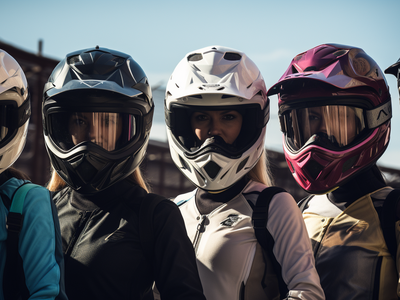 Full-face helmets are designed to provide comprehensive protection for the rider's head and face, and include features such as a chin bar and visor. When it comes to choosing the right fit, full-face helmets offer a variety of sizes and adjustable straps to ensure a secure and comfortable fit for every rider. This is critical, as a helmet that does not fit properly can compromise safety.
One aspect that riders may consider when deciding between full-face helmets and half-shell helmets is ventilation options. Full-face helmets generally have better ventilation systems compared to their half-shell counterparts. They often have multiple vents strategically placed around the helmet to allow air circulation and prevent overheating during long rides or hot weather conditions.
In addition, some full-face helmet models include removable liners or cheek pads that can be easily washed or replaced. This feature not only ensures cleanliness, but also allows riders to customize the inside of their helmet for added comfort.
Full-face helmets offer comprehensive protection for riders' heads and faces. Their availability in a variety of sizes and adjustable straps allows each rider to choose the right fit for maximum safety. In addition, their superior ventilation options make them suitable for warm weather and increase comfort while riding.
,no_upscale(),format(png)/prod/5/5/0/imp_1_550655.jpg "Sweet Protection Strayer 2Vi Mips Helmet Bronco White SM")
,no_upscale(),format(png)/prod/4/1/6/bimg_416490_89715179_7022858857.jpg "ixs Helmet Trigger FF MIPS black SM (54-58cm)")
,no_upscale(),format(png)/prod/8/3/5/imp_1_835465.jpg "Leatt MTB Gravity 1.0 Helmet brown L")
,no_upscale(),format(png)/prod/4/4/8/bimg_448975_470-119-3148-001_01.jpg "Leatt Helmet MTB Enduro 2.0 blanc S")
,no_upscale(),format(png)/prod/7/8/1/imp_1_781021.jpg "ixs Carve 1.0 MIPS Helmet off white M")
,no_upscale(),format(png)/prod/8/3/7/bimg_837880_61c1YXZzFzL.jpg "Leatt MTB Gravity 5.0 Helmet black L")
Exploring half-shell helmets
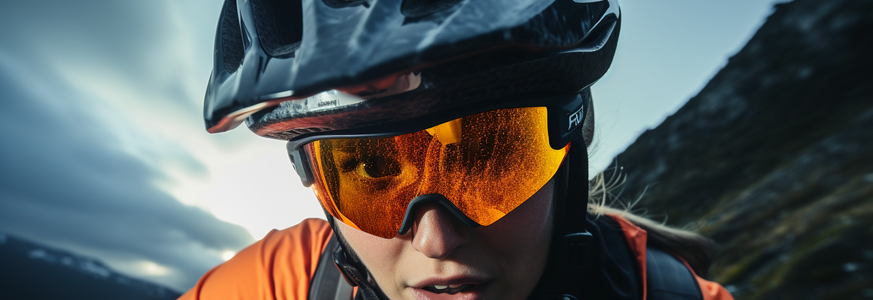 Half-shell helmets offer a viable alternative for those seeking a different level of protection while riding. These helmets are designed to cover only the top and sides of the head, leaving the face exposed. This design offers less protection than full-face helmets, but allows for better ventilation and is lighter, making them a popular choice for riders who prefer freedom and comfort.
One advantage of half-shell helmets is their open design, which allows for better air circulation and ventilation. This feature is especially beneficial in hot weather or strenuous rides when heat can build up. The reduced coverage also means that these helmets are typically lighter than their full-face helmet counterparts, which puts less strain on the neck and shoulders during long rides.
However, it's important to note that half-shell helmets offer less protection compared to full-face helmets. While they protect against impacts to the top and sides of the head, they do not provide facial protection. Riders who choose half-shell helmets should be aware of this trade-off and consider their riding style and preferences before making the decision.
To highlight the advantages of half-shell helmets in a descriptive way, we present the following table:
| Advantages | Half-shell helmets |
|---|---|
| Ventilation | Increased air circulation due to the open design |
| Lightweight | Lower weight relieves pressure on the neck and shoulders |
Overall, half-shell helmets offer an attractive option for riders who value freedom, comfort, and improved airflow while understanding that they are sacrificing some degree of face protection.
Consider your riding style and preferences.
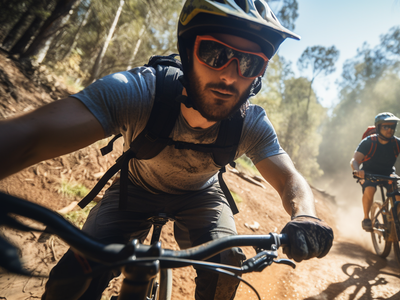 When considering your riding style and preferences, it's critical to evaluate the level of protection and comfort you prioritize in order to make an informed decision about what type of helmet is best for your needs. For individuals involved in touring or mountain biking, several factors come into play.
Touring riders often place more emphasis on comfort than high protection. They typically ride longer distances at lower speeds and focus on enjoying the scenery and freedom of the open road. For these riders, a half-shell helmet might be a better fit because it offers better ventilation and lighter weight compared to full-face helmets. The lighter weight allows for less strain on the neck and shoulders during longer rides.
On the other hand, mountain bikers require more protection due to the technical nature of their sport. These riders encounter rough terrain, jumps and obstacles that pose a greater risk of head injury. As a result, they typically place more emphasis on protection than comfort when selecting a helmet. Full-face helmets provide additional protection in the chin area and offer improved impact resistance.
When deciding between a full-face helmet and a half-shell helmet, it's important to consider your riding style and preferences for comfort versus protection. Touring riders may be more likely to choose half-shell helmets for comfort on long rides, while mountain bikers may choose full-face helmets that offer superior protection on challenging terrain. Ultimately, finding the right balance between these two aspects ensures maximum safety without compromising enjoyment or freedom during your rides.
Comparison of safety features
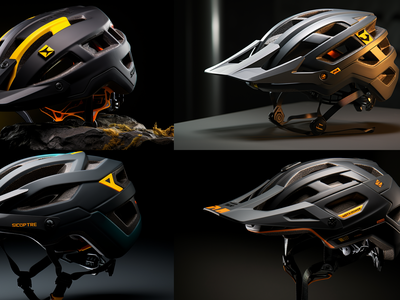 By comparing the safety features of different helmet types, riders can make an informed decision based on objective and impersonal factors to ensure maximum protection during their rides.
When it comes to helmet design, full-face helmets offer more coverage compared to half-shell helmets. Full-face helmets cover the entire head, including the face and chin, and offer greater protection in the event of an accident or impact. Half-shell helmets, on the other hand, cover only the top of the head, leaving the face and chin unprotected.
In terms of impact protection, full-face helmets have an advantage over half-shell helmets. The extended coverage that full-face helmets provide helps distribute impact forces over a larger area and reduces the risk of serious injury to the face and skull. In addition, full-face helmets often have additional safety features such as built-in visors or goggles that protect against debris and UV rays.
However, it is important to note that both types of helmets meet safety standards set by regulatory agencies. Half-shell helmets are designed for riders who prioritize comfort and ventilation, while still providing adequate protection for less extreme riding styles.
Ultimately, the choice between a full-face helmet and a half-shell helmet comes down to individual preference and riding style, but considering helmet construction and impact protection can help riders make an informed decision regarding their safety needs.
Making the right choice for you
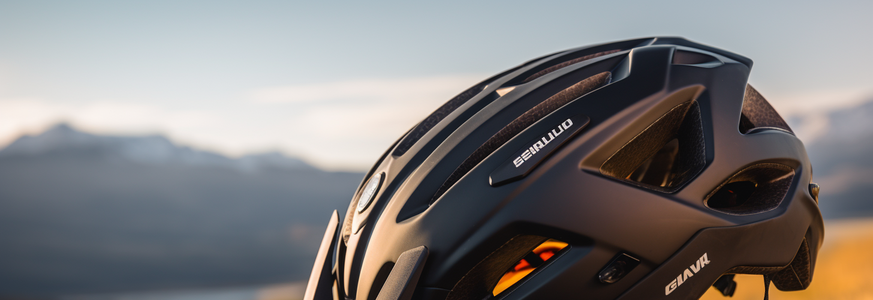 To make an informed decision about the most appropriate helmet for your needs, it is important to carefully consider several factors that will provide maximum protection during rides. One important aspect to consider when choosing between a full-face helmet and a half-shell helmet is personal comfort. Full-face helmets provide complete protection for the entire head, including the face and chin. This can provide a sense of security, especially for riders who engage in high-speed or off-road activities where there is an increased risk of accidents. However, some riders find full-face helmets bulky and restrictive, which can limit their freedom of movement and overall comfort.
On the other hand, half-shell helmets are lighter and more aerodynamic compared to their full-face helmet counterparts. They typically cover only the top of the head, leaving the face unprotected. This design allows for better ventilation and improved visibility while riding. Half-shell helmets are often preferred by cyclists who prioritize freedom of movement and want a less restricted feel.
To further clarify these differences, consider the following table:
| Helmet Type | Coverage | Comfort Level |
|---|---|---|
| Full-face helmet | Full | Bulky |
| Half shell helmet | Upper part only | Lightweight |
Ultimately, choosing the right helmet depends on individual preferences and priorities. Riders must carefully weigh their options, considering safety features along with personal comfort, to make an informed choice that matches their desired level of freedom during rides.
More articles that might interest you
,format(png)/advert/ad-ehW-perfekter-kinderhelm.png "Choosing the perfect helmet for children")
,format(png)/advert/ad-x7Q-mountainbike-helm-offroad-abenteuer.png "A guide to mountain bike helmets for off road adventures")
,format(png)/advert/ad-IVd-fullface-helme-erkundung-welt.png "Ultimate Guide - Exploring the World of FullFace Helmets")
,format(png)/advert/ad-dDr-kinder-fahrradhelme-arten.png "Different types of children bicycle helmets")
,format(png)/advert/ad-P09-fahrradhelmzubehoer-sicherheit.png "The most important bicycle helmet accessories for your safety")
,format(png)/advert/ad-p2H-rennsport-stil.png "Racing with style")
,format(png)/advert/ad-vyk-Moderne-MTB-Helme-fuer-ultimativen-Schutz.png "Modern MTB helmets for ultimate protection")
,format(png)/advert/ad-XNh-fahrrad-full-face-helme.png "Bicycle Full Face Helmets")
,format(png)/advert/ad-K8E-vollgesichts-helme.png "FullFace helmets")
,format(png)/advert/ad-bjM-mtb-helme-geheimnisse.png "Reveal the secrets of MTB helmets.")
,no_upscale(),format(png)/prod/7/8/1/imp_1_781015.jpg "ixs Trigger X 2.0 Helmet olive-black M")
 239.90
,no_upscale(),format(png)/prod/7/8/1/imp_1_781011.jpg "ixs Trigger X 2.0 Helmet black L")
,no_upscale(),format(png)/prod/8/3/5/bimg_835489_61NLGAOawhL.jpg "Leatt MTB Enduro 2.0 Helmet brown S")
,no_upscale(),format(png)/prod/7/8/1/imp_1_781012.jpg "ixs Trigger X 2.0 Helmet black M")
,no_upscale(),format(png)/prod/8/4/8/imp_1_848374.jpg "Sweet Protection Tucker III 2Vi Mips Helmet Bronco White SM")
,no_upscale(),format(png)/prod/5/5/9/bimg_559580_2443828-2024-08-27_10-59-41-1080p.jpg "Leatt Helmet MTB AllMtn 3.0 graphite S")
,no_upscale(),format(png)/prod/8/3/5/imp_1_835481.jpg "Leatt MTB Enduro 3.0 Helmet cream white L")
,no_upscale(),format(png)/prod/8/4/8/imp_1_848418.jpg "Sweet Protection Falconer Aero 2Vi Mips Helmet burnt brown ML")
,no_upscale(),format(png)/prod/4/4/8/imp_1_448950.jpg "Leatt Helmet MTB Gravity 2.0 stealth M")
,no_upscale(),format(png)/prod/4/4/8/imp_1_448916.jpg "Leatt Casque MTB Enduro 4.0 stealth M")
,no_upscale(),format(png)/prod/4/7/0/bimg_470482_bw_lu-ultra-l-ml_5_1.jpg "Lumos Ultra - Lime - M/L")
,no_upscale(),format(png)/prod/4/7/0/bimg_470504_bw_lumount_5_6264.jpg "Lumos Mount for remote control")
,no_upscale(),format(png)/prod/4/4/8/bimg_448926_1785239-2023-10-18_14-01-14-1080p.jpg "Leatt Casque MTB Gravity 1.0 noir M")
,no_upscale(),format(png)/prod/4/7/0/imp_1_470512.jpg "Lumos Visor for Ultra S")
,no_upscale(),format(png)/prod/4/4/8/bimg_448969_1785260-2023-10-03_12-32-47-1080p.jpg "Leatt Helmet MTB Enduro 3.0 stealth S")
,no_upscale(),format(png)/prod/4/1/6/bimg_416491_663067994.jpg "ixs Helmet Trigger FF MIPS black XS (49-54cm)")
,no_upscale(),format(png)/prod/4/7/0/bimg_470505_71d+Ag0ZKdL.jpg "Lumos Insect Net for Ultra M/L")
,no_upscale(),format(png)/prod/5/1/9/imp_1_519217.jpg "Sweet Protection Falconer 2Vi Mips Helmet satin white SM")