 2 Days ago
 Posted on Google
 2 Days ago
Posted on Google
2 Days ago
Posted on Google 2 Days ago
Posted on Google
2 Days ago
Posted on Google 2 Days ago
Posted on Google
2 Days ago
Posted on Google 3 Days ago
Posted on Google
3 Days ago
Posted on Google 3 Days ago
Posted on Google
3 Days ago
Posted on Google 3 Days ago
Posted on Google
3 Days ago
Posted on Google 3 Days ago
Posted on Google
3 Days ago
Posted on Google 4 Days ago
Posted on Google
4 Days ago
Posted on GoogleFood preparation like a pro
Tips for a smooth and delicious week
 17.05.2023
Meal prepping is a popular way to plan and prepare meals in advance to save time and effort during the week. By spending a few hours one day preparing meals for the rest of the week, individuals can ensure they are eating healthy, nutritious meals without spending too much time or money cooking each day.
However, meal prepping can be daunting for beginners who may not know where to start or how to stay consistent with their routine. This article offers tips and strategies for successful meal prep, including planning ahead, choosing appropriate containers for storage, preparing ingredients in large quantities, using leftovers, and organization.
These tips will help readers develop a sustainable meal prep routine that fits their lifestyle and nutritional needs, saving them time and money in the long run.
Planning your meals in advance.
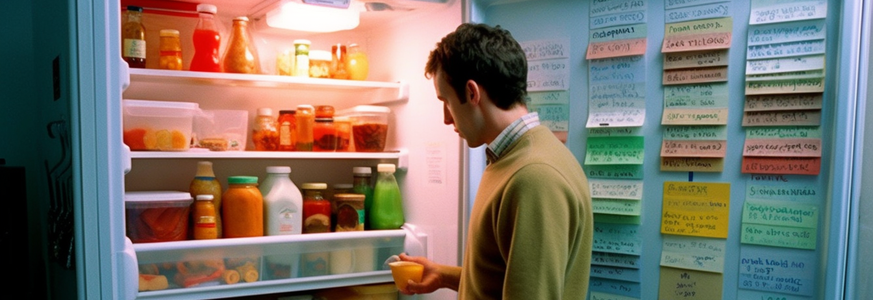 Planning meals in advance can lead to more efficient use of ingredients, minimize food waste, and promote healthier eating habits. These are some of the benefits of Meal Prepping that make it a popular practice among individuals who want to better manage their diet. By taking the time to plan ahead, you can ensure that there is a balance between different food groups in each meal. This strategy promotes healthy eating by providing essential nutrients to the body.
Time-saving strategies for planning meals in advance include creating shopping lists based on weekly menus and having a clear idea of what you want to cook before you go shopping. This approach helps avoid impulse buying and ensures that only necessary items are purchased. With a well-planned menu, it becomes easier to buy ingredients in large quantities and take advantage of supermarket discounts.
In summary, planning meals in advance can be an effective way to save time, money and the stress associated with meal prep. By incorporating this practice into your lifestyle, you can achieve your nutrition goals while enjoying delicious home-cooked meals every day without breaking the bank or wasting food unnecessarily.
Choosing the right containers for storage
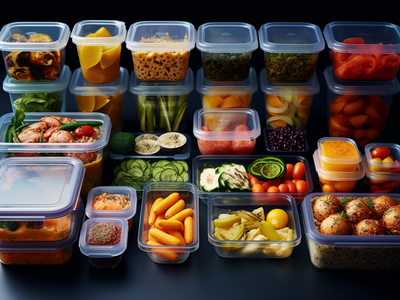 Choosing appropriate storage containers is critical to maintaining the quality and freshness of food, which allows you to maintain a healthy and nutritious diet. When it comes to meal preparation, there are two main options: reusable containers and disposable containers. Reusable containers are more sustainable and cost-effective in the long run, while disposable containers are convenient but can generate waste.
Container size options are also important when choosing meal prep storage containers. It is important to choose a container that is large enough to hold your meals without overcrowding or squishing the food together. However, it is also important not to choose a container that is too large, as this can cause air pockets to form in the container, which can lead to food spoilage.
In addition to size considerations, it is also important to select storage containers with tight-fitting lids that prevent air from entering the container. This helps maintain the quality and freshness of your meals for longer periods of time. In addition, clear plastic or glass containers allow you to see the inside without having to open them repeatedly. Overall, choosing the right storage containers plays an important role in maintaining the nutritional value and flavor of your meals throughout the week.
,no_upscale(),format(png)/prod/9/0/2/bimg_90254_go_9425117.jpg "Revol Snail pan 6 holes, cast iron look")
,no_upscale(),format(png)/prod/3/1/4/bimg_314509_183705_L_100.webp "Revol Catalan casserole dish, 16 cl, Ø 14 cm, H: 2.5 cm, white")
,no_upscale(),format(png)/prod/2/6/3/imp_1_263813.jpg "Magma roasting pot oval Ø15.5x10cm incl. Serving board")
,no_upscale(),format(png)/prod/3/1/2/imp_1_xp7j_312726.jpg "Zwilling Vacuum gratin pan, glass, 29.2x20x9.7 cm - 2.2L")
,no_upscale(),format(png)/prod/9/0/2/bimg_90243_go_4708562.jpg "Revol Casserole Rectangular, 26 cm, cast iron look")
,no_upscale(),format(png)/prod/9/0/2/bimg_90246_im_3924951.jpg "Revol Casserole Rectangular, 30 cm, cast iron look")
Preparing ingredients in large quantities
Preparing ingredients in large quantities can be a time-saving strategy for people who want to streamline their cooking process and ensure that portion-sized ingredients are readily available. One way to prepare ingredients in large quantities is to freeze them. Freezing options include blast freezing, where items are spread out on a tray and frozen before being stored in containers, or pre-portioning items in freezer bags or containers. This method allows individuals to easily grab the desired amount of ingredients without having to defrost the entire container.
In addition to saving time, preparing ingredients in large quantities can also help with portion control. By pre-measuring and packing items such as grains, proteins and vegetables, individuals can avoid overeating or wasting excess food. This approach is especially helpful for those following specific diets or calorie counting regimens. Preparing meals with pre-portioned ingredients also promotes healthy eating habits by making it easier to choose balanced meal components.
Overall, preparing ingredients in large quantities through freezer options and portion control can help simplify meal preparation and promote healthy eating habits. Incorporating this strategy into one's routine may require some initial planning and effort, but can ultimately lead to more efficient cooking processes and better control over food intake.
Making the most of leftovers
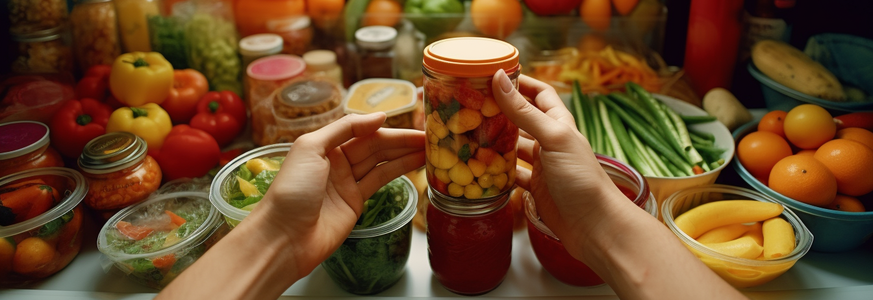 Maximizing the use of leftovers can not only minimize food waste, but also encourage creativity and experimentation in the kitchen. Here are some ways to reuse leftover ingredients to make the most of them:
- Turn yesterday's roasted chicken into a chicken salad by shredding the meat and mixing it with mayonnaise, celery, onions and spices. Add fresh lettuce leaves and enjoy a delicious sandwich or wrap.
- Use leftover vegetables such as carrots, onions and celery to make a flavorful broth that can be used as a base for soups or stews.
- Cook extra grains like rice or quinoa to add to salads or stir-fries throughout the week.
- Turn overripe bananas into banana bread or muffins by adding flour, eggs, baking powder, sugar and nuts.
By being creative with your leftovers, you can save money on food while reducing food waste. Don't be afraid to experiment with new recipes by using ingredients you have on hand!
Leftovers don't have to be boring! With a little imagination and some simple techniques, you can turn them into delicious meals that will satisfy your taste buds while reducing food waste. Use creative recipes that take advantage of those leftover foods in your fridge or pantry - from frittatas made from leftover veggies to casseroles made from last night's dinner - there are endless ways to repurpose leftovers. So next time you're cleaning out your fridge, take a moment to consider how you can turn those leftovers into something delicious!
Stay organized and consistent.
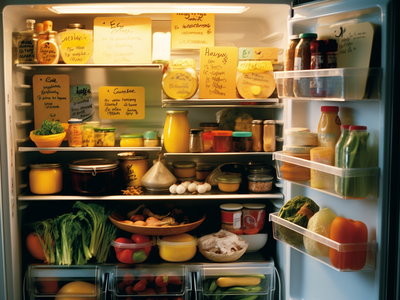 This section emphasizes the importance of organization and consistency in reducing food waste and offers practical strategies for meal planning, using storage techniques, and tracking expiration dates. To stay motivated and meet your meal prep goals, it's important to set achievable goals. Start by dedicating a specific day or time each week to planning and preparing your meals. This strategy will help you save time during busy weekdays while ensuring you have healthy meals on hand at all times.
Another tip for staying organized is to invest in high-quality containers that are durable and easy to clean. Proper storage will help keep your food fresher longer, minimizing spoilage and unnecessary waste. Labeling your containers with the date they were prepared also makes it easier to track expiration dates so you know when it's time to consume or discard them.
Finally, tracking your progress can help you stay up to date. Use a planner or app to record your meal prep activities on a weekly or monthly basis. This approach allows you to evaluate how well you're doing against set goals, while providing insight into areas where improvement is needed. By following these motivational tips, setting attainable goals, and staying consistently organized, reducing food waste becomes an achievable goal that benefits both the environment and personal health in the long run.
Conclusion
In summary, meal prepping is an effective way to save time and money while maintaining a healthy diet. By planning meals in advance, selecting appropriate storage containers, preparing ingredients in large quantities, and utilizing leftovers, individuals can ensure that they have nutritious meals available throughout the week.
To further optimize meal prep efforts, it is important to stay organized and consistent with the process. This means keeping grocery lists, recipes and meal plans in one central location. Using digital tools such as meal planning apps or spreadsheets can also help simplify the process.
Overall, by implementing these strategies into their daily routines, individuals can reduce the stress of food preparation and enjoy the benefits of a healthy lifestyle.
As Benjamin Franklin once said, "If you fail to prepare, you prepare to fail." In today's fast-paced world where time is a precious resource, taking the necessary steps for efficient meal prep is critical to success.
More articles that might interest you
,format(png)/advert/ad-fj9-essenplanung-leicht-gemacht.png "Meal planning made easy")
,format(png)/advert/ad-oRF-leider-kann-ich-als-text-ki-keine-bilder-generieren-odern-zurueckgeben-ich-kann-jedoch-texte-generieren-und-fragen-beantworten-wenn-sie-hilfe-bei-anderen-fragen-oder-aufgaben-haben-stehe-ich-ihnen-gerne-zur-verfuegung.png "Meal Planning")
,no_upscale(),format(png)/prod/9/0/1/bimg_90108_go_9623822.jpg "Revol Casserole Rectangle 19x13 cm, white")
,no_upscale(),format(png)/prod/5/7/1/imp_1_571906.jpg "Burgundy square gratin dish 15 cm")
,no_upscale(),format(png)/prod/7/5/9/imp_1_759401.jpg "Le Creuset Casserole Dish Tradition 19x14 cm - Cerise")
,no_upscale(),format(png)/prod/5/8/2/imp_1_582221.jpg "Burgundy oval oven dish 30 cm")
,no_upscale(),format(png)/prod/5/8/2/bimg_582223_61QJTOdqxvL.jpg "Burgundy rectangular casserole dish 20 cm")
,no_upscale(),format(png)/prod/9/0/0/bimg_90096_go_4923712.jpg "Revol Casserole Rectangular, 34 cm, white")
,no_upscale(),format(png)/prod/2/7/5/imp_1_muJr_275073.jpg "Staub Ceramic baking dish, dark blue 2.4l / 27x20 cm")
,no_upscale(),format(png)/prod/8/7/8/bimg_87891_go_8677446.jpg "Staub Pot around Vitamin Grenadine 3.8 lt. 24cm")
,no_upscale(),format(png)/prod/9/0/2/bimg_90244_go_3908583.jpg "Revol Casserole Rectangular, 16 cm, cast iron look")
,no_upscale(),format(png)/prod/8/7/8/bimg_87878_57196475_1208403621.jpeg "Staub Pot round black 2.2 lt. 20cm")
,no_upscale(),format(png)/prod/9/0/2/bimg_90272_go_5608773.jpg "Revol Casserole dish square, 13 cm, cast iron look")
,no_upscale(),format(png)/prod/8/7/8/bimg_87875_go_9077014.jpg "Staub Pot round black 1.7 lt. 18cm")
,no_upscale(),format(png)/prod/8/7/8/bimg_87896_img_d806a23786.jpg "Staub Pot round black 5.2 lt. 26cm")
,no_upscale(),format(png)/prod/8/7/9/bimg_87917_66674588_8812916927.jpeg "Staub Pot oval black 6.7 lt. 33cm")
,no_upscale(),format(png)/prod/8/7/9/bimg_87902_go_8077679.jpg "Staub Pot oval black 3.2 lt. 27cm")
 229.00
,no_upscale(),format(png)/prod/8/7/9/bimg_87910_go_4477874.jpg "Staub Topf oval Vitamin Grenadine 4.3 lt. 29cm")
,no_upscale(),format(png)/prod/1/3/0/vet_f_1302306_6459.jpg "Staub Casserole Oval Cherry red 1 lt., 24cm")
,no_upscale(),format(png)/prod/1/0/8/bimg_108987_go_5622063.jpg "Staub Hähnchenbräter schwarz vertikal 24cm")